I know a ton of you have been waiting for this one. Teaching you to make your own plastic keychains!
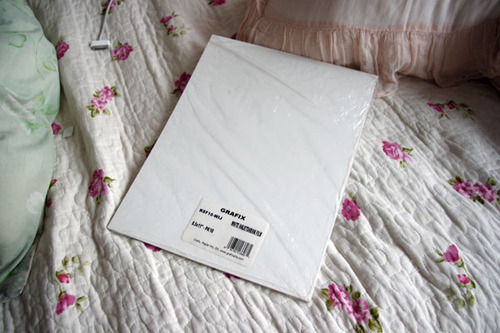
To start off, I think the biggest question everyone has is what I use to make them. I work with shrink film. You might be familiar with Shinky Dink brand shrink film as a kid. I use Grafix brand white inkjet shrink film. The inkjet kind is relatively pricey compared to the regular kind. If you’re using regular, I don’t recommend you stick it in your printer. Sharpie markers would be good for that.
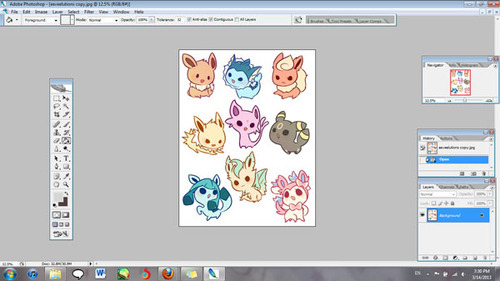
Alright, now open up the file with the images that you’re working with. Make sure your images are a lot bigger than you want your finished product to be since they shrink significantly.
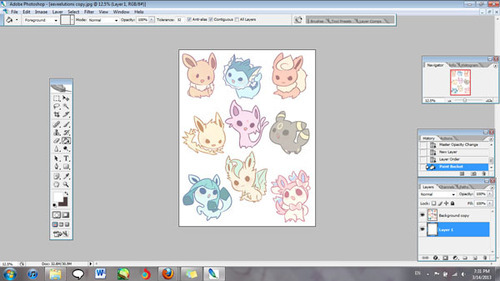
You’ll also want to lighten the opacity to about half. I go somewhere between 50-60%.
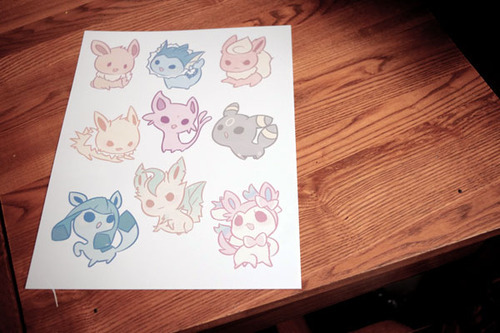
Now print your image out! I’ve found that it works best for me when I have it at the plain paper setting, and standard print quality.
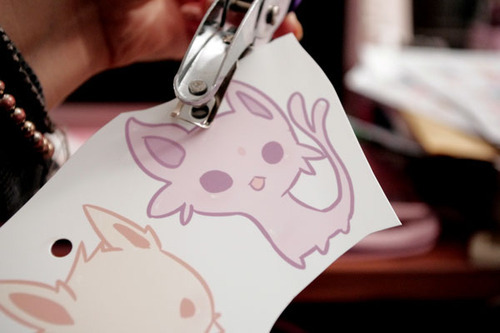
Holepunch with a ¼" holepuncher BEFORE you shrink them. It’s so much more work to have to punch holes when your plastic is thick!
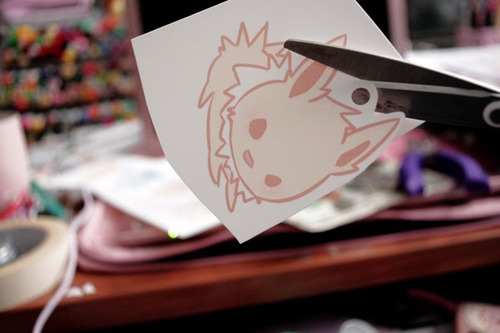
Cut out your design, leaving the amount of border you want.
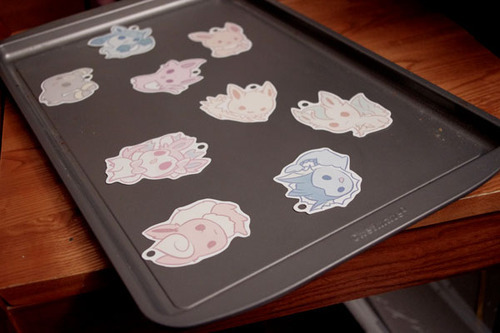
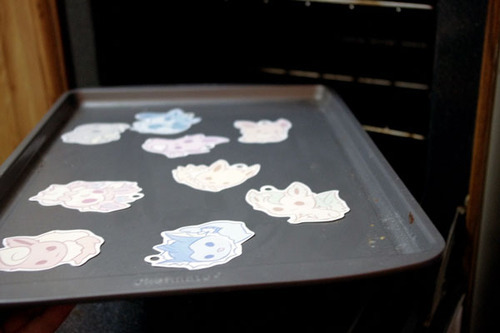
Set them on a tray for convenience. An aluminum foil sheet works too, but I recommend cookie trays because they are easier and quicker to get out of the oven.
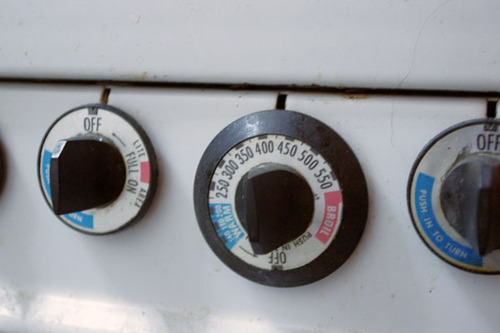
Preset heat. Your shrink film package will tell you what temperature to set it at, but I find that it isn’t always accurate for me. I generally set temperature to 350 degrees or so.
Put them in the oven. Remember to keep track of time! I leave them in for about a minute and a half.
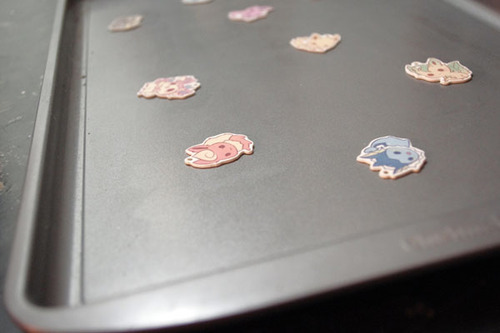
After time is up they should be super small! Magic!
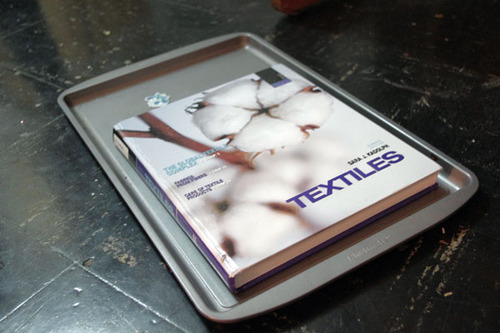
If your charms are not flat, put something heavy on it right out of the oven when they are still hot and malleable.
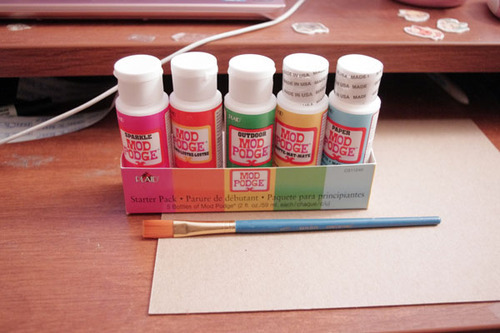
If you’d like to, you can seal them now. In my last two batches, I used clear topcoat nail polish. The problem with that is that I need between 3-5 coats of it, and it takes a while to dry. I’ve been experimenting with modpodge.
For lariats, you can use jump rings or lobster clasps.
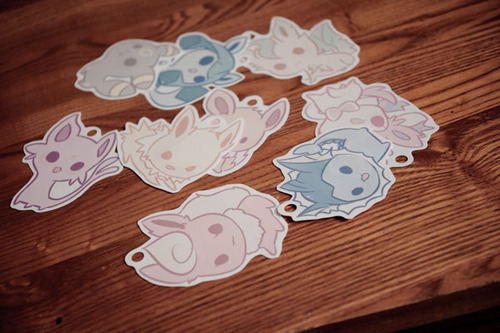
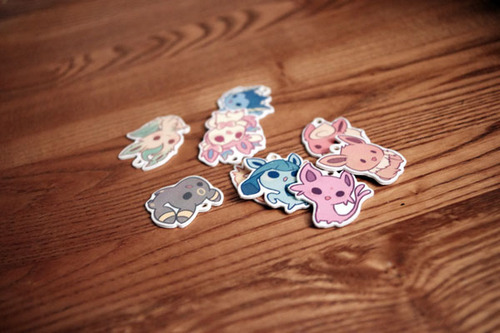
Here is one that I made that wasn’t sealed. The finished texture after shrinking is a little bit rough. There’s nothing wrong with leaving them unsealed, but because they are inkjet printed, the colors wash right of without protection.
This is one that was sealed with modpodge. The colors become a little more vibrant and smooth and water resistant. Things often get stuck on when applying or drying so be careful.
These ones down here were sealed with clear nail polish. They come out shiny if you put enough coats, but the grainy texture will still be there.
Well, there ya go! Have fun making your own keychains!
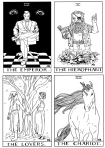
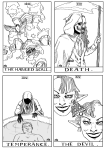
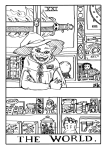
So this was a really personal project for me, after listening to TAZ i wanted to do something to show my love and appreciation for it, as well as get the chance to say goodbye to all the characters again. Hopefully that comes across (wow this is truly the dorkiest thing I’ve ever done)
Anyway feel free to ask why i picked which character for each Tarot card (trust me i thought way to far into it) and please listen to taz if you haven’t already!
Zora is one of the two main characters in our second game, In the Valley of Gods. Quite a few people remarked on Zora’s character design, in particular her hair, when they saw our announcement trailer. Indeed, creating Zora’s hair is a challenging problem for intertwined technical and cultural reasons. I would like to talk about our explorations and aspirations so far, and why it’s important to us we get it right by the time we ship.
In 2015, Evan Narcisse wrote an important essay on natural hair and blackness in video games. You should read it. It was the first time I’ve really thought critically about hair and representation in video games, and the yearning in the piece struck me.
Hair is very personal. As an immigrant woman of Chinese descent with atypically frizzy wavy hair, my hair is, to an extent, an outward expression of my struggle with who I am and where I belong (or don’t). I want to love my hair the way it naturally is, but it’s never quite simple as that.
So when I first saw the character design for Zora, I had an understanding of what task lays before us as a team. None of us has Type 4 hair, characterized by tight coils and common among black women. In fact, none of us have even made video game hair before, but we are committed to giving Zora the hair she loves, the way she chooses to wear it, with all the care and effort we can.
Building Zora’s hair will be a continual effort that lasts the whole project. Our first milestone for the hair was getting it in shape for our announcement trailer, when Zora was first introduced to the public.
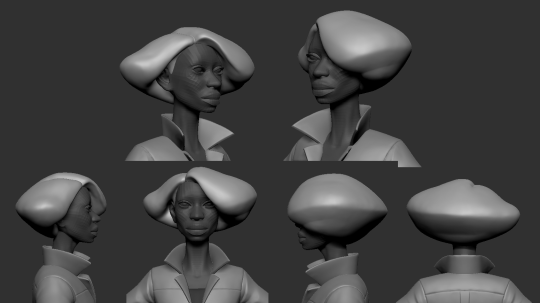
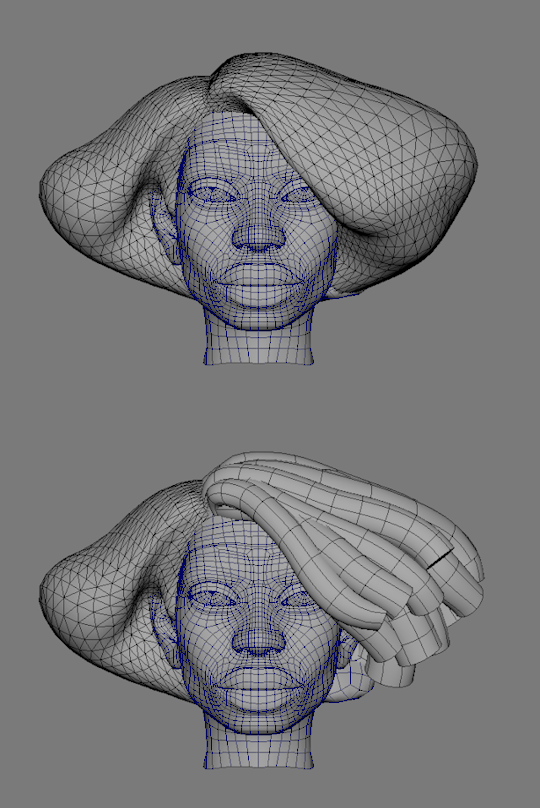
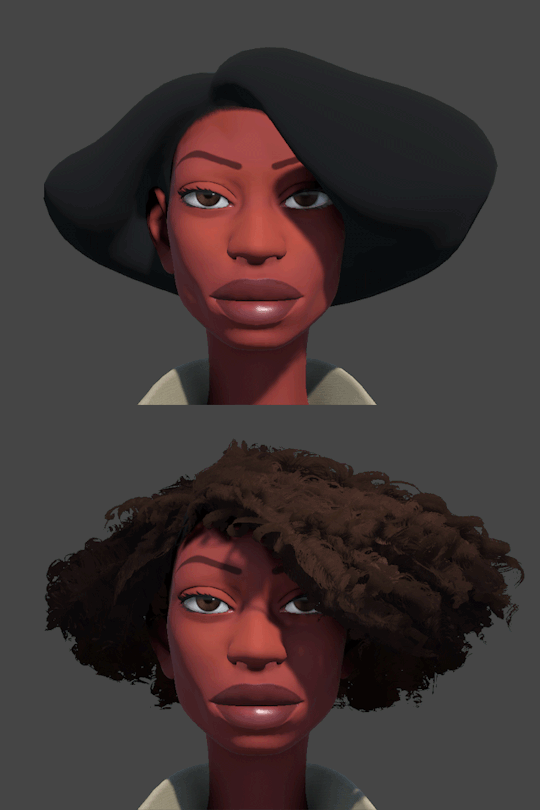
As a small team without a dedicated character modeler, we hired a couple of specialists to do Zora’s character sculpt. Their task included sculpting a static version of her asymmetric bob so we could evaluate the scale and silhouette of her whole body. We knew the static sculpt would serve only as a placeholder and reference while we figured out a longer term hair solution.
Hair is a complicated combination of geometry, shader work, and texturing, and it requires a very tight and frequent iteration loop to get right. It made sense for us to do it in house even if we haven’t created hair before. The task of modeling “good enough, first pass” real-time hair for the trailer fell to me; the shading and rendering work to our graphics programmer Pete; and the copious texture and oversight work to our art director Claire. We started by investigating what other developers have done.
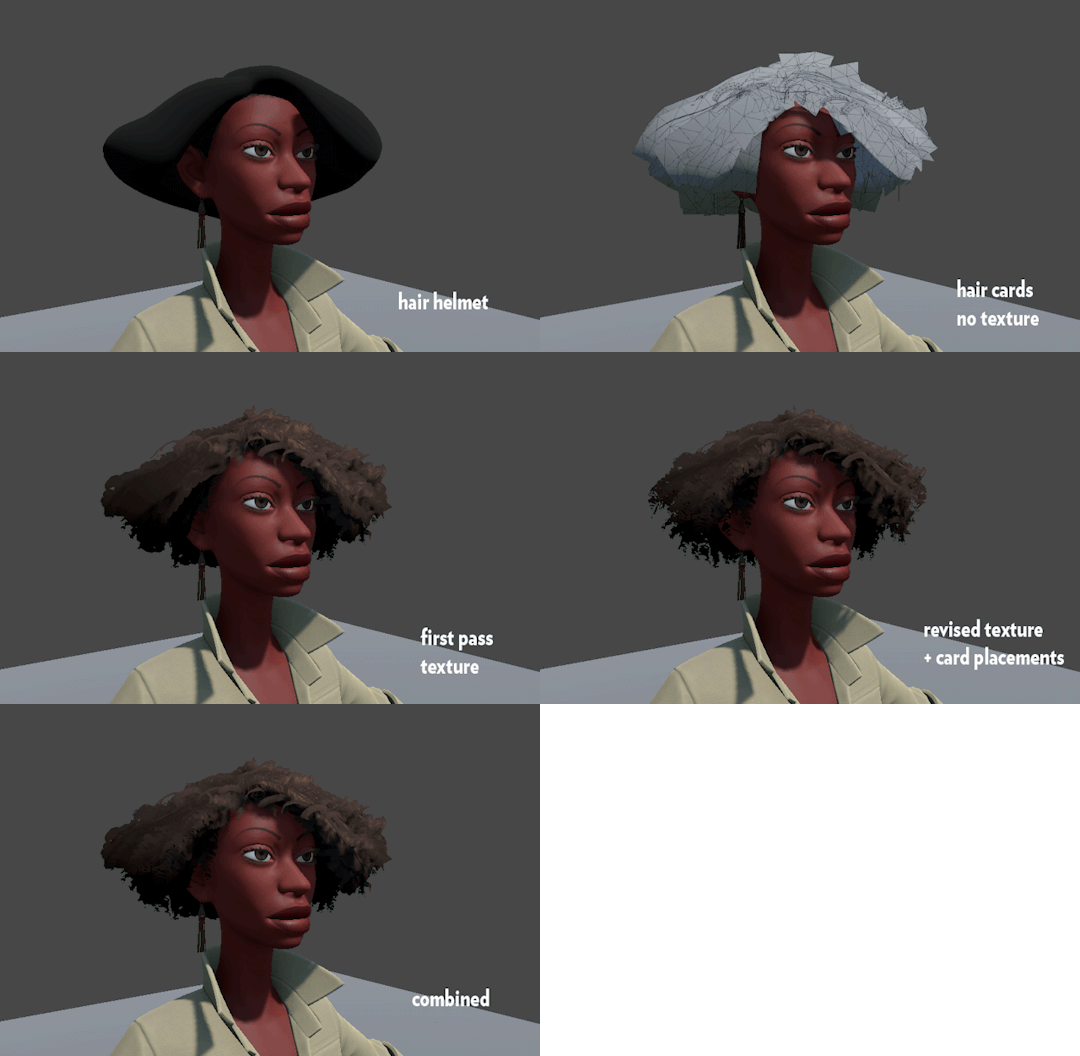
Real-time hair geometry, as far as I can tell, falls into two broad categories: “hair helmets” and “hair cards.” A hair helmet is what I call completely opaque geometry, as one would see on a plastic action figure or Lego figurine—think Princess Zelda’s hair in The Legend of Zelda: Breath of the Wild. Hair cards, on the other hand, use many sheets of hair strands to portray more free-flowing hair —think many characters in Uncharted 4. That approach is well suited to hair types that can be abstracted into sheets, which works well for any length of straight hair. There are also hybrid approaches, such as this wonderful tutorial of a game-ready afro by Baj Singh.
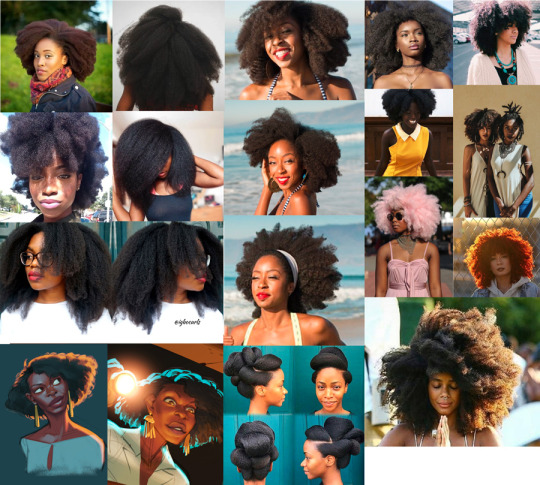
Claire designed Zora’s Type 4 coily hair to have a lot of texture and volume, but it also has a “big-chunky-tubes” structure allowing fluid “floppy” movement. Neither of the two previous approaches is ideal for Zora’s hair.
The closest in-game hair reference I found is Nadine Ross from Uncharted 4, but on closer inspection Nadine has Type 3 hair with very defined curls, quite different from Zora’s tighter Type 4.
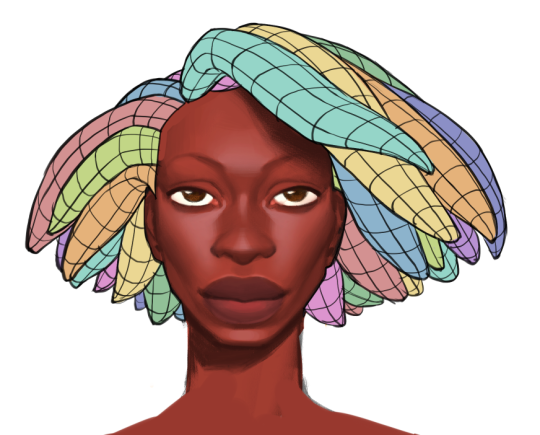
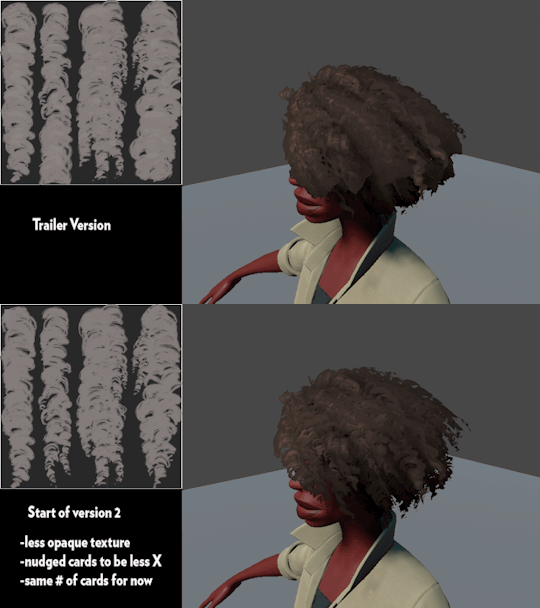
Sometimes the only way to solve a problem is… just by making something, even if it sucks in the beginning. So I started off with a variant of the hair cards approach by making “big tubes” of three cross-cards to follow the shape and flow of Zora’s hair helmet sculpted by Ted Lockwood. It was important to have some geometry that remotely resembles what we will ultimately create, to test the shader Pete has been writing.
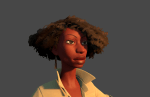
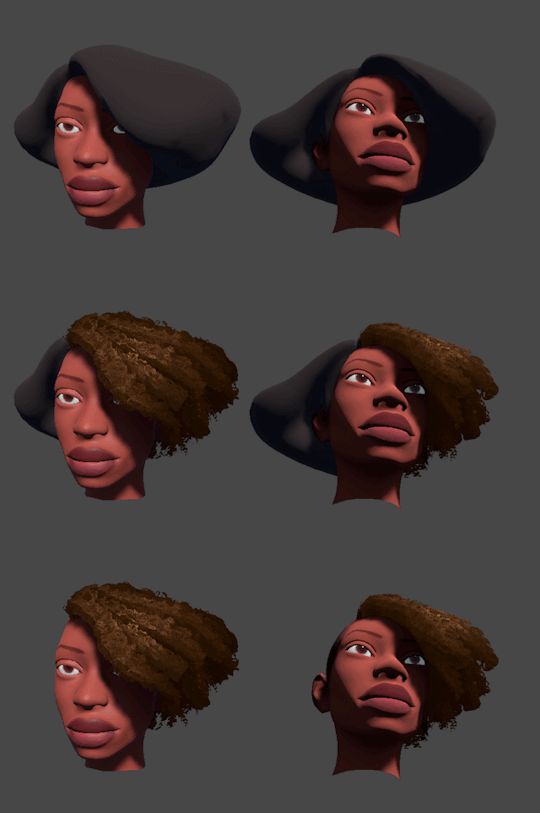
I would work on the hair for a few days at a time whenever I wanted a break from creating the trailer’s environments. After two months of wrangling various placements of polygon tubes, flat cards, and cross-cards, as well as bending all their normals as if her hair were a shrub, we had the following result as of October 2017.
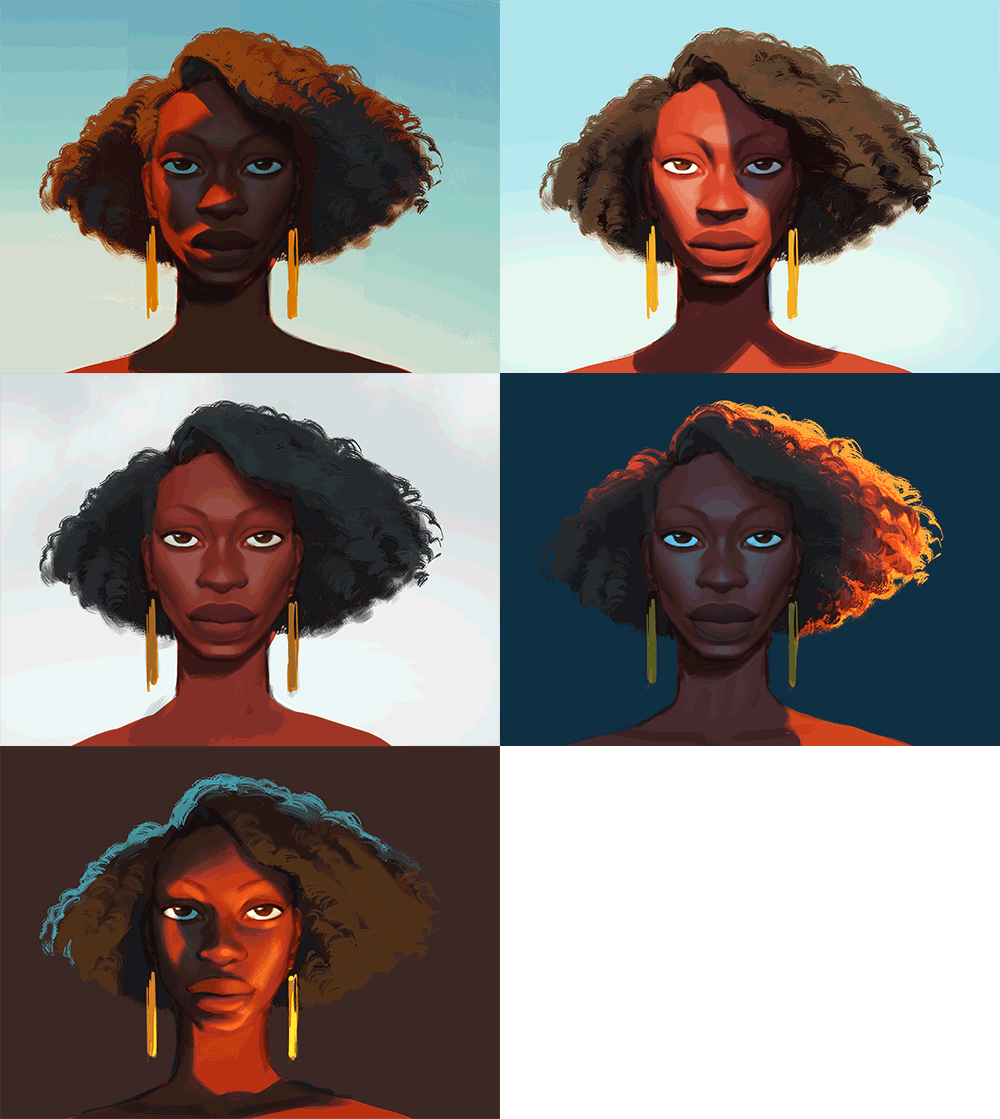
Part of the challenge of all this is that not only are we making Type 4 hair, we are making stylized Type 4 hair that evokes Claire’s distinct style. It became clear very early that the way Zora’s hair interacts with light would be a key part of the shader work.
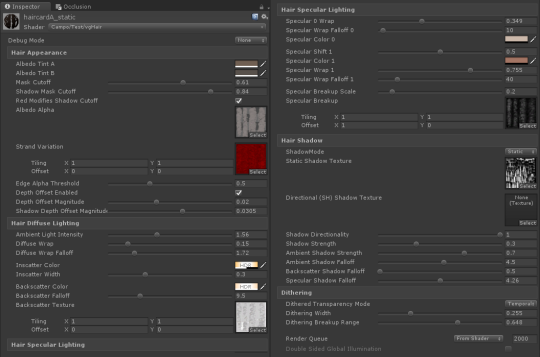
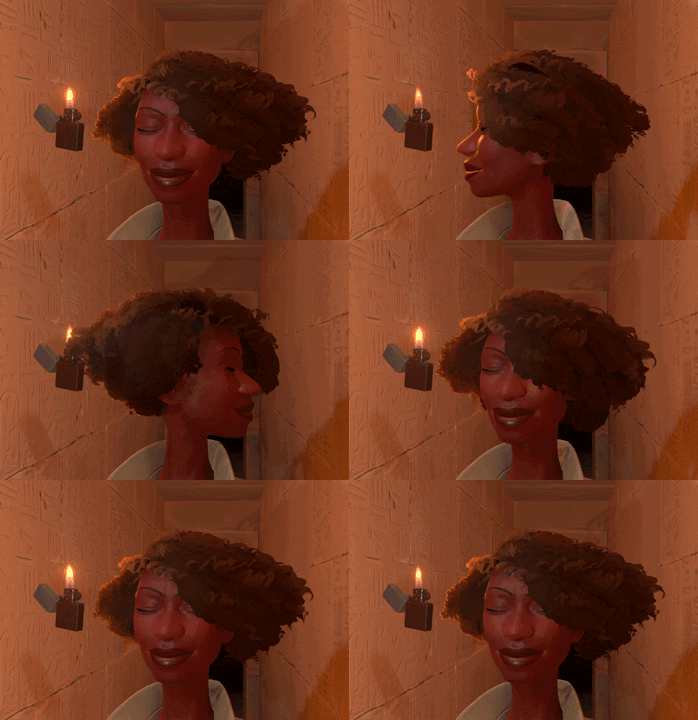
I’m not able to go into the technical details of the shader in this post, but we ended up adding individual controls for each type of lighting we wanted the hair to respond to, based on Claire’s specific concept art: for instance, light striking from the back, from the side, ambiently, and so on. This got finicky, but taught us a lot and provided enough variation to create the trailer. It will take much more experimentation and iteration for the hair to behave according to the style guide under all necessary lighting conditions, but making the trailer gave us a lot of direction for our next steps.
Right now, we have an intensely stylized back-scatter effect in the hair when backlit, but we still lack the ability to do high-quality rim lighting without relying heavily on post-processing.
We are currently only using alpha-cutouts for the hair cards (alpha sorting is a whole different topic outside the scope of this post) and I’ve been advised by character artists that some number of alpha blend cards for flyaway hairs usually works well.
For the trailer, James rigged Zora’s hair and hand animated the movement, but we plan on applying physics simulation to the hair rig for the shipping game.
There is a long way to go before we’re truly happy with Zora’s hair, but this is a good first step. As the rest of the game’s visuals become more solidified, it will become more clear what we need to tackle next.
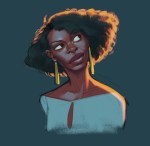
some of our early work on Zora’s hair! That painting at the top is still one of my faves that I’ve done/
cleaning with ADHD is a nightmare. it’s an endless cycle of finding a half-finished chore and stopping the one you were already working on, then remembering that something else needs to be done and getting started on that, then finding half-finished chore and
i have the solution! i call it ‘junebugging’.
have you ever seen a junebug get to grips with a window screen? it’s remarkably persistent, but not very focused. all that matters is location.
how to junebug: choose the location you feel you can probably get some shit done on today. be specific. not ‘the bathroom’ but ‘the bathroom sink’. you are not choosing a range, you are choosing a center; you will move around, but your location is where you’ll keep coming back to. mentally stick a pin in it. consider yourself tethered to that spot by a long mental bungee cord.
go to your location. look at stuff. move stuff around. do a thing. get distracted. remember you’re junebugging the bathroom sink and go back there. look at it some more. do a different thing. get distracted. get a sandwich. remember you’re junebugging and go back to the bathroom sink.
nt’s will go crazy watching you, and if they demand to know When You Will Be Done you will probably have to roll them in a carpet and stuff them up the chimney. you’re done when you feel done, or you’re too bored to live, or it’s bedtime, or any number of other markers, you get to pick. but the thing is, by returning repeatedly to that one spot, you harness the ‘hyperactivity’ part instead of wasting all that energy battling with the ‘attention deficit’ part.
not only will the bathroom sink almost certainly be clean, and probably the mirror and soap dish too, you might’ve swapped in a fresh toothbrush, a new soap, you might’ve unclogged the drain – you will probably also have cleaned or fixed up several things in the near vicinity, or in the path between the sink and where you get the fresh toothbrush, or maybe you did your grocery shopping cuz you were out of soap, or maybe you couldn’t find a clean hand towel and ended up doing laundry.
this is good. you got shit done! it wasn’t necessarily Cleaned The Bathroom in the way nt’s think of it, but screw ‘em. things are better than they were.
plus you worked off enough energy to be able to sleep. which is not small potatoes when living the ADHD life. 😀
Don’t let the adorable name fool you—this is some Seriously Good Advice. May be useful for brain fog and depression, too!
My Brother’s Husband tells the story of Yaichi, a single father raising his daughter, and Mike Flanagan, a Canadian man who was married to Yaichi’s twin brother Ryoji. Mike travels unannounced to Japan after his husband’s recent passing. Yaichi must face his deceased twin’s sexuality and overcome his own preconceptions, and Mike learns what caused the brothers to drift apart.
The manga by Gengoroh Tagame will debut as a TV drama on NHK’s BS Premium in March 2018 and will star Ryuta Sato as Yaichi and former sumo wrestler Baruto Kaito as Mike.




























 Izzie’s tumblr archive